
Winter play is fun and games—until someone gets hurt.
Many activities come with risks, starting with sledding, which is one of the most common causes of cold-weather injuries.
“Younger children are more likely to sustain head injuries because they have a harder time steering and tend to collide with obstacles,” says Dr. Anne Brayer M.D., professor of Emergency Medicine, Pediatrics and the Center for Community Health and director of the Injury Free Coalition for Kids of Rochester. “In older kids, we more commonly see fractures and contusions, particularly when they’re being pulled behind snowmobiles or ATVs, which can lead to severe injuries.”
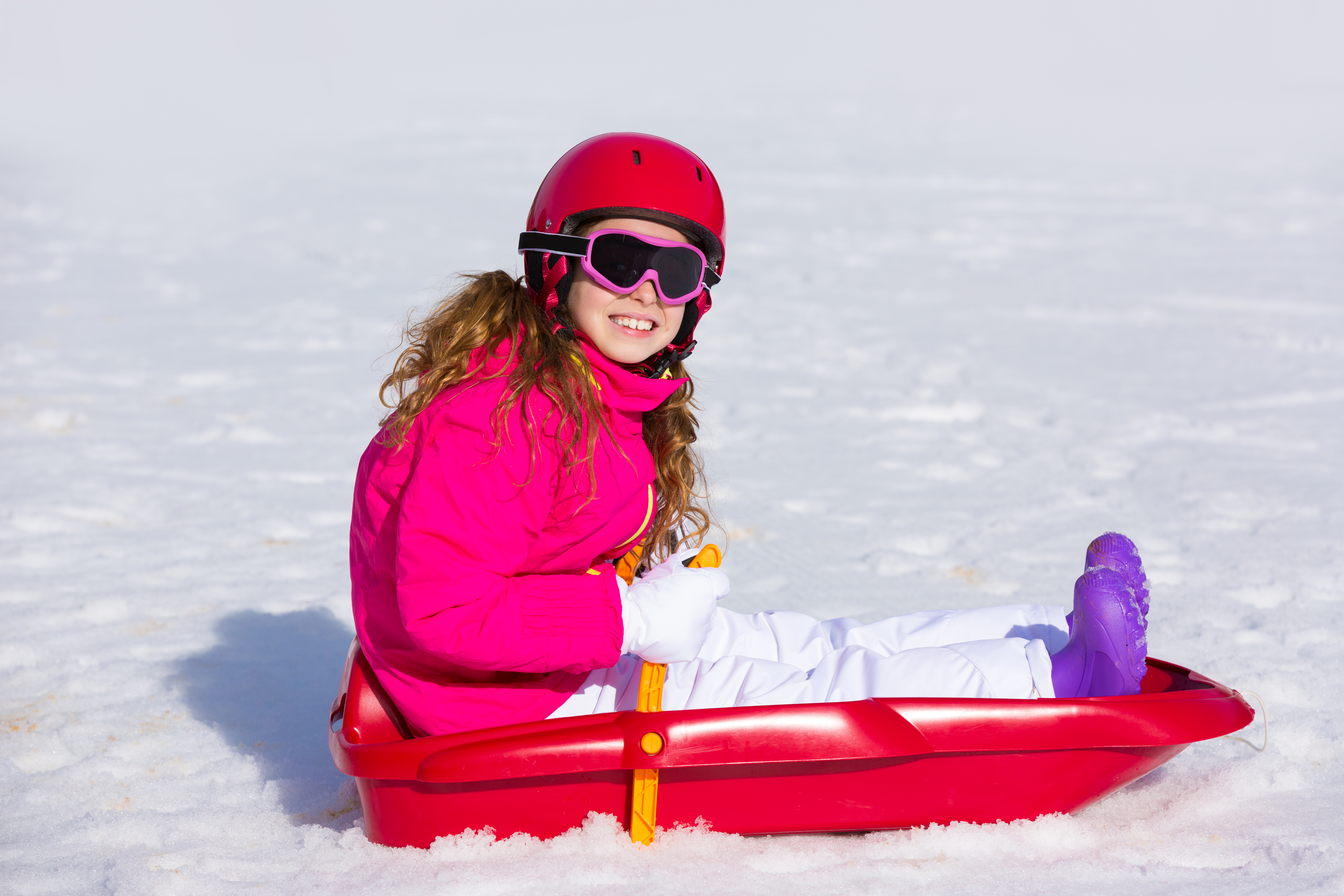
Steerable sleds or those with brakes are the safest options. With saucer-style sleds and inflatable tubes, kids can easily spin out or bounce off course.
Remember: Children should always sled feet first and keep hands, scarves, or loose clothing away from the ground to prevent them from getting caught. And of course, choose a hill that’s far from roads or parking lots and free of trees, fences, or rocks.
Are Snow Forts Safe for Kids?
Certain structures can be dangerous. “Tunnels and roofs can collapse, leading to possible suffocation,” says Dr. Brayer.
If your child loves to build, keep the fort roofless and use tall snow walls instead to create the same effect. Additionally, avoid digging into large snowbanks created by plows—they can contain rocks, ice chunks, and air pockets that make the snow unstable.
Did You Know?
Rochester’s Highland Park rink on Lily Pond and Churchville skating pond offer supervised natural ice skating, with ice conditions tested for safety before opening. Never skate on untested natural bodies of water—they may look frozen but aren’t always safe.
Dress for the Weather: Layers Make the Difference
Dress kids in layers so they can adjust as they warm up or cool down, and make sure their heads, hands, and feet are well covered. Parents should check fingers and toes frequently for early signs of frostbite:
- Tingling
- Numbness
- Discoloration
If your child does show signs of frostbite, warm the area gently with warm (not hot) water. “If the symptoms don’t dissipate in about 15–20 minutes or if there are skin changes like peeling or blistering, it’s time to seek medical attention,” says Brayer.
How Cold Is Too Cold to Play Outside?
There’s no universal temperature cutoff—close supervision is key. Check in on kids often when it’s freezing or below-freezing outside. Look for the early signs of frostbite mentioned above, and head indoors right away if they appear.
Encourage warm-up breaks every 20–30 minutes and keep outdoor play short when windchill is severe.
Final Reminders for Safe Winter Fun
It’s the most wonderful time of the year—and we want to keep it that way! The most important rules are simple:
- Stay away from traffic. Never let children play on or near roadside snowbanks, where vehicles may not see them.
- Supervise outdoor play. Younger children especially need an adult nearby to watch for hazards and intervene if necessary.
- Choose safe snow piles. Avoid snowbanks created by plows—they can hide rocks, ice chunks, and other dangers.
By keeping kids away from roads and closely supervised, snow play can stay fun and worry-free.
Need Quick Care Without Leaving Home?
Our Virtual Urgent Care offers same-day video visits for kids ages 5 and up—see a pediatric provider anytime, from anywhere.
Source link
Pet Psychic | Animal Communication Readings
Primary schools lead the way for healthy living
Stakeholders push for AI-powered lifestyle monitoring, preventive healthcare