
If you’re noticing hot flashes, irregular periods, fatigue, weight gain, or brain fog for the first time, you might wonder: Am I in menopause?
More likely, you’re entering perimenopause—the years-long transition leading up to menopause when hormones begin to shift. Starting about 10 years before menopause, women usually begin experiencing symptoms in their mid-30s or 40s.
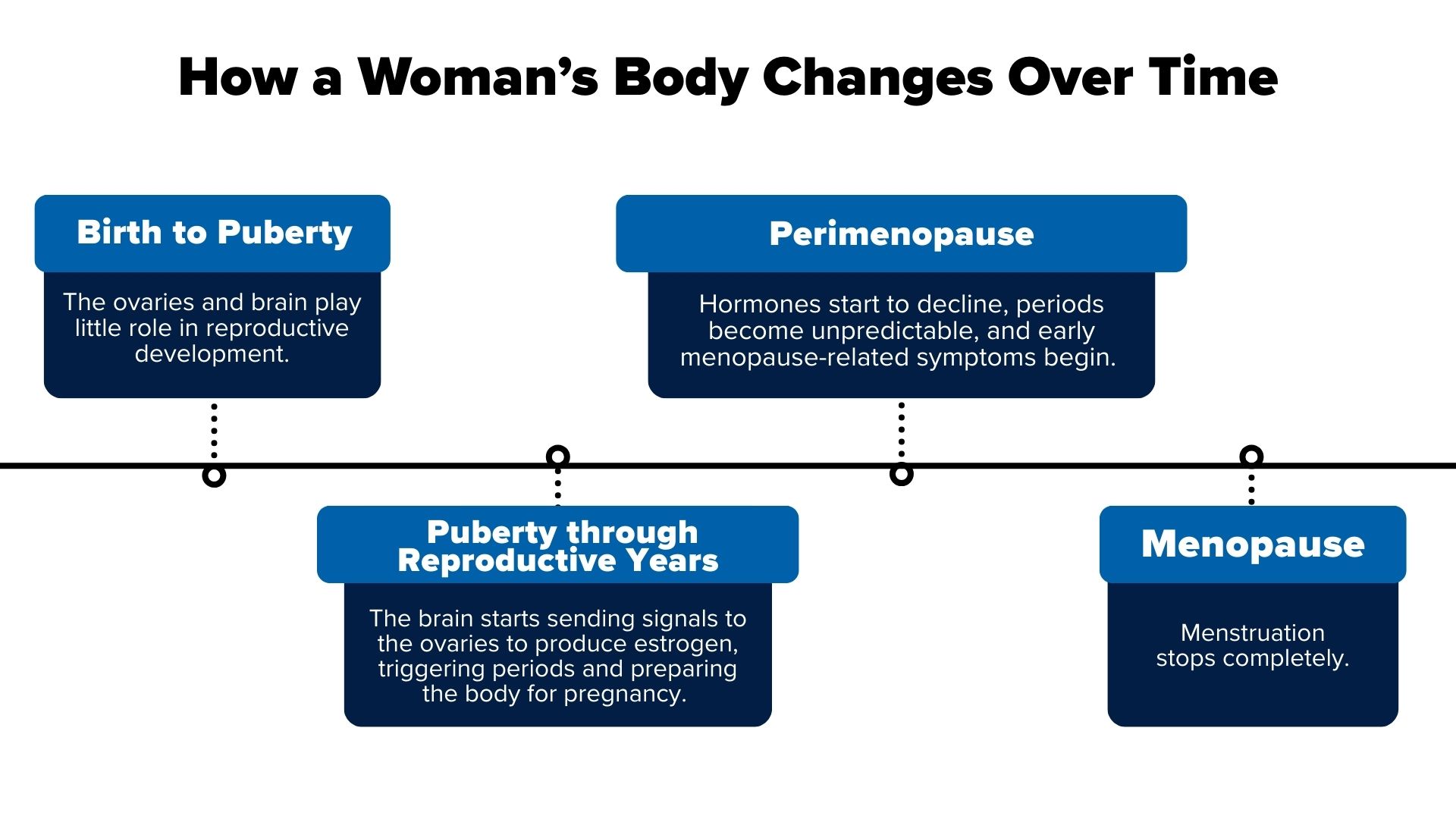
“Perimenopause and menopause are often talked about interchangeably, but they are two different stages, each with unique symptoms and health considerations,” said James R. Woods, MD, Professor of Obstetrics and Gynecology at the University of Rochester Medical Center and a specialist in perimenopause and menopause treatment.
Dr. Woods explains what happens with your body during perimenopause and gives tips on managing symptoms.
What Are the Symptoms of Perimenopause?
Hormones regulate everything from mood to metabolism to temperature. As levels of the female sex hormone estradiol fluctuate and decline, symptoms emerge across multiple systems of the body.
Can you get pregnant in perimenopause?
Yes, most can still get pregnant during perimenopause. While you might experience reduced fertility, ovulation doesn’t stop completely until menopause.
If you have questions about fertility, reach out to your healthcare provider or contact our Strong Fertility Center.
Here are some of the most common changes:
- Hot Flashes: Your body becomes more sensitive to heat. Even a small temperature rise may trigger a “flush” response.
- Digestive Issues: The intestinal lining thins and gut bacteria shift, leading to slower metabolism, heartburn, constipation, and other GI symptoms.
- Weight Gain: Reduced estrogen can slow metabolism, increasing body fat and making weight loss harder.
- Mood, Memory, and Anxiety: Fluctuating estradiol can reduce serotonin and dopamine, affecting mood and mental clarity.
- Skin Changes: Lower estrogen leads to thinning, dryness, and reduced elasticity.
- Bone Health: Declining estrogen speeds up bone loss and increases risk for osteoporosis and fractures.
Science-Backed Ways to Manage Perimenopause Symptoms
There are plenty of options for managing perimenopause symptoms. Here are some strategies supported by physicians and research:
- Diet & Exercise: Focus on daily movement and healthy eating. Consider trying the Mediterranean-style diet, reducing alcohol consumption, and focusing on consuming calcium and vitamin D.
- Birth Control Pills: This option can help regulate periods, reduce symptoms, and prevent pregnancy. Birth control is not suitable for everyone, so consult your provider for consideration.
- Supplements: Some over-the-counter vitamins and minerals may help overall health. Check with your provider about options like calcium, vitamin D, iron, zinc, and magnesium.
- Medications: Some prescription options can reduce hot flashes and mood symptoms. Your provider can help determine what options are best for you.
- Hormone Replacement Therapy (HRT): Low-dose estrogen patches contain about one-tenth the estradiol of reproductive years but can be highly effective in reducing symptoms. Be cautious of misinformation about HRT—reach out to your provider with questions.
Take a “Pause” Before Buying Some Perimenopause Products
Quick Checklist Before Trying Any Perimenopause Product
- Could it interact with my medications?
- Do credible studies support it?
- Did my provider approve it for my symptoms?
“Given the growing awareness of perimenopause and menopause symptoms… the market is booming with supplements, creams, and ‘hormone-balancing’ products promising relief,” said Dr. Woods. He warns that many are unregulated, unproven, or risky.
Be cautious with perimenopause products that are:
- Not FDA-regulated for purity or safety
- Purchased online (especially creams and pellets you can’t verify)
- Marketed as “detox” treatments; there is no scientific basis for detoxing perimenopause symptoms
Be wary of supplements like black cohosh, evening primrose oil, and phytoestrogens (soy supplements). These have limited or no evidence of symptom relief. If you’re wondering if a specific supplement might be helpful, check with your healthcare provider.
Some unregulated supplements may even be linked to higher blood pressure or increased breast cancer risk.
Should I See a Doctor About Perimenopause Symptoms?
Yes. If symptoms affect your sleep, mood, work, or quality of life, your doctor can help you identify safe treatments.
Each woman is different in the way her body changes. Because your transition is unique to you, it is important that you have a conversation with your provider to learn exactly what you need to do to protect your health for this stage of your life, and all the years ahead.
Women’s Health Services
Our providers are certified by the North American Menopause Society. We are women’s health experts dedicated to your well-being and are actively engage in everything that supports your reproductive health, including the latest research and treatments.
Source link
HCA Florida Healthcare offers tips for setting and keeping goals to improve heart health
Brain’s Potential – Unlock Your Mind
Nature of Society Sales Pitch.